

Deer Behavior and Recall Designs Calls
Hey, fellow hunting enthusiasts! As you know, hunting deer isn’t just about shooting straight. First, you have to understand the animal—what it eats, where it goes, why it stops, and how it reacts. All of that is part of its behavior. And once you know how it works, that’s when you can get close. Slowly. Strategically. And call it at the right moment. With the right sound. The right tool.
That’s where Recall Designs calls come in. Because a well-blown Bocote call is sometimes worth more than a whole day of waiting for nothing. And with a Deer Break in your hands, you can provoke a dominant buck.
Get him out of his hole. A real showdown.
Why It’s So Hard to Fool | Deer Behavior
Deer aren’t naive. They have a better sense of smell than you do. They hear everything. They pick up on the slightest movement—especially in the forest.
His nose can detect up to 297 million scent particles. His hearing? Like radar. His eyes? Adapted to even the faintest light. You can be in camouflage all you want—if he spots you… it’s over. He takes off. Without warning.
The rustle of a leaf? He stops dead in his tracks. A strange smell? He turns around. He doesn’t have time for surprises—especially in the middle of the season.
A precise, almost military-style schedule | Deer behavior
Deer are creatures of habit. There’s nothing random about their movements. They follow a routine. They have two main periods of activity: early in the morning and late in the afternoon.
Before sunrise, he leaves his safe haven. He goes out to feed. He follows the trails. He explores the edges of fields. And often, he returns to the same spot. Always keeping a low profile.
Around noon, he rests. Sometimes he moves a little—to change spots or to chew the cud more peacefully.
At the end of the day, he sets off again. He leaves the forest. He returns to the fields. Sometimes to the orchards. He looks for the things he loves: acorns, fallen apples, corn. Anything that gives him energy.
What it eats guides its path | Deer Behavior
In the fall, it’s feast time. He eats a lot. He’s preparing for winter. He’s putting on weight. Places with plenty of food become his favorite stops.
Acorns, apples, beans, fresh shoots. He’s selective. He doesn’t just graze on anything. He knows his trails. He follows them.
In winter, it adapts. It scratches away at the snow. It gnaws on branches. It survives. It moves less. But it remains alert. On the lookout. Even more wary.
It walks, but not at random | Deer Behavior
The territory of an adult male? About 2 or 3 km². Sometimes more—especially if a female is in heat.
But he stays close to certain places—transition zones, forest edges, marshes, fields lined with maple trees—spots where he can eat, hide, and watch.
Researchers confirm it: GPS collars show frequent stops within 50 meters of ecotones. These transitional zones are like magnets—for him. And for you, if you know how to spot them.
The Weather Changes Everything | Deer Behavior
A rainy morning? Good news. Scents don’t travel as far. Noise is absorbed. The deer feels safer. It comes out. It moves around.
A strong wind? A bad sign. Sounds are muffled. His sense of smell is impaired. He stays hidden. He waits.
Is the pressure rising after a cold front? That’s when he gets active. He moves around more. He eats. He searches.
Understanding these signals means understanding how they work. And adjusting your strategy.
Recall Designs Calls: Accurate, Effective, and Tested | Deer Behavior
Calling isn’t just about letting off steam. It’s about communicating. It’s about saying, “I’m here. Come see me.” And it has to ring true.
Recall Designs calls are made for just that. Each model is calibrated, tested, and tuned to the natural frequencies of deer. Not too high-pitched. Not too low-pitched. Just right.
Three models. Three approaches:
- Bocote: a dry, realistic grunt. Range: 450 meters. Frequency: 3,200 Hz. It attracts the curious. It provokes.
- Deer Break: Deeper, stronger. Range: 400 meters. Frequency: 2,800 Hz. It draws out the big ones. It challenges.
- African Wenge Blackwood: Softer. Less harsh. Range: 420 meters. Frequency: 2,950 Hz. It’s reassuring. It’s calming.
Every bird call has its place. Its purpose.

How to Use Them in the Field | Deer Behavior
You don’t need a Ph.D. Just the ability to listen. And common sense.
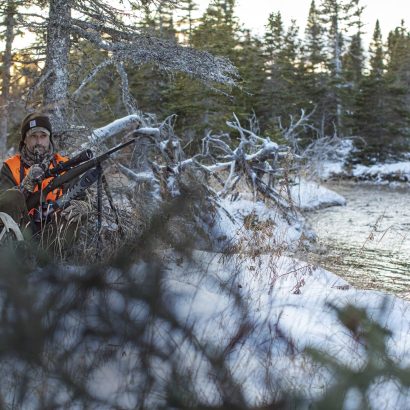
- Stand with your back to the wind. Always.
- Wait for the calm. Let the forest breathe.
- Start slowly. One or two grunts spaced apart.
- Watch. Listen. Don’t answer too quickly.
- If nothing happens, try the sequence again. After ten minutes.
- To simulate a fight? Combine the “Deer Break” with rubbing against a dead branch.
- Stay ready. A male might show up out of the blue. Without warning.
On rainy days, turn up the volume a little. In strong winds, move closer. And keep your call in your hand—but not in your mouth—when you’re taking aim!
Frequently Asked Questions – Deer Behavior and Calling
When should you use a bird call?
From mid-October through the peak of the rutting season in early November. That’s when the males are most responsive.
Does volume matter?
Yes. If it’s too low, they can’t hear anything. If it’s too loud, they get suspicious. Adjust it so that a faint echo can be heard at 100 m.
How many calls should you make?
Not too much. Two or three grunts every 10–15 minutes. Between sequences, stay quiet. Watch.
Can deer tell the difference between a real grunt and a fake one?
Yes… if the decoy is of poor quality or used incorrectly. That’s why it’s important to have a precise, well-calibrated model.
Can a person’s body odor ruin everything?
Absolutely. Even a good call won’t make up for poor odor management. Stay clean. Store your laundry in an airtight container. Always approach downwind.
Conclusion – Become a strategist, not just a shooter
A deer isn’t just a target. It’s a smart player. It tests. It observes. It learns.
But you, too, can adapt. By understanding his behavior. By reading the signs. By calling at just the right moment.
With a Bocote, a Deer Break, or an African Wenge Blackwood from Recall Designs, you speak its language. You step into its world.
So, check out the store. Get equipped. And head into the forest like a true expert.

Thank you for taking the time to read us! Have a question? An idea? Do you have a hunting story to share? Write to us at info@recalldesigns.com.
Follow us on Facebook or Instagram. You’ll find our latest news. And useful tips. Images from the field. Calls to action. Everything that fuels a real passion.
Looking for the right tool? Explore the Recall Designs online store. Our expertise is just a click away. Tested products. Designed for hunters. By hunters.


Comments are closed