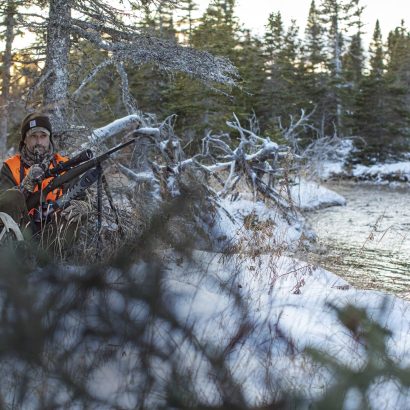
Physical preparation for moose season
Complete guide to big game hunting in North America
Big game hunting in North America is one of the most physically demanding of all outdoor activities. Whether it’s moose in Quebec, elk in the Rockies, white-tailed deer in the Appalachians or caribou in Alaska, hunters face considerable physical challenges: rugged terrain, long distances, carrying heavy equipment, extreme weather conditions and transporting hundreds of kilograms of meat.
According to North American Forest Health Services data, over 35% of hunting injuries are related to physical exertion rather than firearms. Proper physical preparation is not a luxury – it’s a necessity for a safe, effective and enjoyable hunting experience.
Table of contents | Hunter’s physical preparation
- 1. Hunting injury statistics and data
- 2. Cardiovascular program: The basis of your endurance
- 3. Functional training: Strength and power for the field
- 4. Flexibility and mobility: injury prevention
- 5. Injury prevention and safety techniques
- 6. Nutrition and hydration for hunting performance
- 7. Integrated weekly training plan
- Conclusion: Investment that counts
- Key points to remember
- Last recommendation
- For more information and resources
- FAQ
1. Statistics and data on hunting injuries | Physical preparation of the hunter
Profile of exercise-related injuries
| Type of injury | Percentage | Main cause |
|---|---|---|
| Ankle sprains | 28% | Rough terrain, muscle fatigue |
| Lower back pain | 24% | Carrying heavy loads, poor technique |
| Knee problems | 19% | Steep descents, lack of reinforcement |
| Cardiovascular problems | 15% | Intense effort at altitude, poor condition |
| Tendonitis and bursitis | 14% | Repetitive movements, prolonged carrying of weapons |
| Total analyzed | 100% | Base: 2847 incidents reported (2018-2024) |
Physical requirements according to type of hunt
| Type of game | Average distance/day | Weight of meat to be transported | Level of requirement |
|---|---|---|---|
| Moose | 8-15 km | 200-300 kg | Very high |
| Wapiti | 10-18 km | 150-250 kg | Very high |
| Caribou | 6-12 km | 80-120 kg | High |
| White-tailed deer | 5-10 km | 40-70 kg | Moderate to high |
| Black bear | 4-8 km | 80-150 kg | Moderate to high |
Important note: These statistics come from studies conducted by the wildlife departments of Quebec, Ontario, British Columbia, Alberta, Montana, Colorado and Alaska between 2018 and 2024. The level of requirement takes into account distance, weight, terrain and typical weather conditions.
2. Cardiovascular program: The basis of your endurance | Physical preparation for hunters
Cardiovascular endurance is the cornerstone of any physical preparation for hunting. The ability to maintain a moderate effort over several hours, interspersed with peaks of intensity, determines your effectiveness in the field and your safety.
12-week training protocol
| Weeks | Frequency | Duration | Bag load | Type of exercise |
|---|---|---|---|---|
| 1-3 | 3x/week | 30-45 min | 5-10 kg | Walking on flat ground |
| 4-6 | 4x/week | 45-60 min | 10-15 kg | Hilly terrain + intervals |
| 7-9 | 4-5x/week | 60-90 min | 15-20 kg | Rough terrain + climbs |
| 10-12 | 4-5x/week | 90-120 min | 20-25 kg | Full hunt simulation |
Complementary cardiovascular exercise
Brisk walking on hilly terrain: The most specific exercise for hunting. Choose natural trails with gradients. Carry a progressively heavier backpack.
Trail running: Excellent for developing agility and balance on uneven terrain. Start at 60-70% of your maximum speed.
Mountain bike: Develops leg power with less impact on joints. Ideal for active recovery days.
Swimming: Excellent complement for cardiovascular training without joint stress. 2-3 sessions of 30-45 minutes per week.
Interval training (HIIT): 2 minutes of intense effort followed by 2 minutes of recovery, repeated 8-10 times. Simulates peak exertion during tracking or final approach.
Minimum target: By the end of the program, you should be able to walk 10-12 km on hilly terrain with a 20-25 kg pack without excessive fatigue. This will enable you to hunt safely and efficiently.
3. Functional strength training: Strength and power for the field | Physical preparation for hunters
Strength training for hunting must be functional – it must reproduce the movements you’ll be doing in the forest. Forget isolation exercises and concentrate on compound movements that call on several muscle groups simultaneously.
12-week strength training program
| Exercise | Muscle groups | Sets × Repetitions | Hunting application |
|---|---|---|---|
| Squat | Legs, glutes, core | 3-4 × 8-12 | Uphill walking, lifting |
| Deadlift | Back, legs, trunk | 3-4 × 6-10 | Game lifting, heavy lifting |
| Farmer’s Walk | Whole body, grip | 3-4 × 30-60 sec | Transport of meat quarters |
| Walking lunges | Legs, balance | 3 × 10-15/leg | Uneven ground, climbs |
| Rowing barre | Back, arms, trunk | 3-4 × 10-12 | Pulling, hoisting game |
Specific carrying exercises
Transporting game is the most intense effort of big-game hunting. A quartered moose can weigh between 30 and 60 kg, and the terrain is rarely flat or open.
| Exercise | Recommended load | Time/distance |
|---|---|---|
| Farmer’s Walk (2 dumbbells) | 40-60 kg total | 30-50 metres × 3-4 sets |
| Bear Hug Carry (weighted bag) | 40-50 kg | 20-30 metres × 3 sets |
| Weighted backpack | 25-35 kg | 500-1000 metres × 2-3 sets |
| Weight sled | 50-80 kg | 30-50 metres × 3-4 sets |
Recommended progression: Start with 60-70% of these loads for the first 4 weeks, then gradually increase. Always prioritize technique over weight.
4. Flexibility and mobility : Injury prevention | Physical preparation of the hunter
Flexibility is often overlooked by hunters, yet it’s essential to prevent injury. In the forest, you’ll be stepping over logs, down ravines and crouching for long minutes at a time. Limited mobility greatly increases the risk of injury.
Dynamic stretching routine (before exercise)
| Movement | Repetitions | Main benefit |
|---|---|---|
| Leg swings (front-back) | 10-15 per leg | Hip and hamstring mobility |
| Leg swings (lateral) | 10-15 per leg | Adductors, abductors |
| Hip rotations | 10 per direction | Amplitude of hip movement |
| Trunk rotations | 10 per direction | Spine flexibility, back prevention |
| Arm circles | 10 per direction | Shoulder mobility, warm-up |
| Squats with rotation | 10 repetitions | Full-movement integration |
Static stretching routine (after exercise)
| Stretching | Duration | Target zones |
|---|---|---|
| Hamstrings (standing or seated) | 30 seconds × 2 | Back thighs, back pain prevention |
| Quadriceps (on one leg) | 30 seconds × 2/leg | Front thighs, knees |
| Buttocks (figure 4) | 30 seconds × 2/leg | Buttocks, hips, sciatica |
| Psoas (low lunge) | 30 seconds × 2/leg | Hip flexors, lower back |
| Back and lumbar (forward flexion) | 30 seconds × 2 | Spine, lower back |
| Shoulders and pectorals | 30 seconds × 2 | Shoulder mobility, posture |
Important: Static stretching should always be performed AFTER exercise, never before. Dynamic stretching before exercise increases performance and reduces the risk of injury.
5. Injury prevention and safe techniques | Physical preparation of the hunter
Protective equipment and support
| Equipment | Prevention | Key features |
|---|---|---|
| Hunting boots | Ankle sprains (↓ 65%) | Ankle support, non-slip sole, waterproof |
| Walking poles | Knee problems (↓ 30%) | Adjustable, ergonomic handles, carbide tips |
| Lumbar belt | Back pain (↓ 40%) | Rigid, adjustable, breathable support |
| Compression kneepads | Knee pain (↓ 25%) | Graduated compression, patella support |
| Ergonomic backpack | Back/shoulder pain (↓ 50%) | Waist belt, padded shoulder straps, internal frame |
Safe lifting and transport techniques
Bend your knees, not your back: Keep your back straight and use the power of your legs to lift. The lower back is not designed for heavy lifting.
Keep the load close to your body: The further away the load is, the greater the stress on your back. Hold the meat quarters against your body.
Never rotate under load: Move your feet to change direction rather than rotating your trunk. Rotation under load is the #1 cause of herniated discs.
Teamwork: For loads over 40 kg, always work in pairs or more. Coordinate your movements and communicate clearly.
Take regular breaks: When transporting game, take a 2-3 minute break every 10-15 minutes. Exhaustion drastically increases the risk of injury.
Use a sled or stretcher: For transports over 500 metres, an improvised sled or stretcher is infinitely safer and more efficient.
6. Nutrition and hydration for hunting performance | Hunter’s physical preparation
Nutrition and hydration are critical factors often underestimated by hunters. Proper nutrition and hydration can make the difference between a productive day and premature exhaustion or even a medical emergency.
Caloric requirements in a hunting situation
| Activity intensity | Calories/hour | Daily needs (8h) | Example of activity |
|---|---|---|---|
| Weak (stalking) | 200-300 | 3500-4000 | Waiting in watchtower, little movement |
| Moderate | 350-450 | 4500-5000 | Walking on level ground, spotting |
| High | 500-650 | 5500-6500 | Walking on hilly terrain with equipment |
| Very high | 700-900 | 7000-8500 | Game transport, steep climbs |
Hydration strategy
| Condition | Needs/hour | Signs of dehydration |
|---|---|---|
| Cold weather (< 5°C) | 250-400 ml | Dark urine, fatigue, confusion |
| Cool weather (5-15°C) | 400-600 ml | Dark urine, dry mouth, headaches |
| Temperate (15-25°C) | 600-800 ml | Intense thirst, cramps, dizziness |
| Hot weather (> 25°C) | 800-1200 ml | Nausea, weakness, cessation of sweating |
Golden rule: If you’re thirsty, you’re already slightly dehydrated. Drink regularly before you feel thirsty, in small quantities (150-250 ml) every 20-30 minutes.
7. Integrated weekly training plan | Hunter’s physical preparation
Here’s an example of a typical week integrating cardio, strength training, flexibility and recovery. Adapt to your level and personal constraints.
| Day | Main training | Duration / Notes |
|---|---|---|
| Monday | Functional training (legs + trunk) | 60 min – Squat, deadlift, lunges |
| Tuesday | Moderate cardio + stretching | 45-60 min – Hilly walk with weighted bag (10-15 kg) |
| Wednesday | Functional training (upper body + portage) | 60 min – Rowing, farmer’s walk, shoulders |
| Thursday | Cardio intervals + yoga/mobility | 30 min HIIT + 20 min stretching |
| Friday | Weight training + carrying exercises | 60 min – Complete program with transport simulation |
| Saturday | Long simulation hunting trip | 2-3 hours – Rough terrain, 20-25 kg bag |
| Sunday | Active recovery or rest | 30-45 min light walk OR complete rest |
Adjustments according to phase: Weeks 1-4: Reduce intensity by 25-30%. Weeks 5-8: Program as is. Weeks 9-12: Gradually increase load and duration. Last week before hunting: Reduce volume by 40-50% to allow full recovery.
Conclusion: The investment that counts | Physical preparation for the hunter
Physical preparation for big game hunting is not a luxury – it’s an investment in your safety, efficiency and enjoyment. The statistics are clear: well-prepared hunters suffer 3 to 4 times fewer injuries, have more successful hunts, and retain positive rather than traumatic memories.
A 12-week preparation program may seem daunting, but the benefits are immediate and long-lasting. Not only will you be ready for hunting season, but you’ll improve your overall health, functional strength and endurance for all activities of daily living.
Key points to remember | Physical preparation for hunters
- Start your preparation 12 weeks before the season – this is the minimum for significant physiological adaptations.
- Cardiovascular endurance is your #1 priority – without it, strength and technique are useless.
- Strength training must be functional – favour compound movements that reproduce hunting actions.
- Flexibility and mobility are not optional – they reduce the risk of injury by 40-60%.
- Protective equipment is a safety multiplier – invest in good boots, walking poles and an ergonomic bag.
- Nutrition and hydration determine your performance – plan your calorie intake and hydration strategy.
- Rest and recovery are part of the program – training without recovery leads to exhaustion and injury.
Latest recommendation | Physical preparation for hunters
Final recommendation: If you have any pre-existing health problems (cardiovascular, joint, diabetes, etc.), consult a physician before starting this program. A preventive medical assessment can identify risks and enable you to adapt the program safely.
FAQ | Hunter’s physical preparation
Do I really have to start 12 weeks before the hunt?
Yes, the document recommends starting 12 weeks before the season to obtain significant physiological adaptations.
What is the minimum goal to be reached at the end of the cardio program?
Be able to walk 10-12 km on hilly terrain with a 20-25 kg bag without excessive fatigue.
Which bodybuilding exercises are the most “hunter-specific”?
Compound and functional movements (e.g. squat, deadlift, farmer’s walk, walking lunge, rowing barre) and weight-bearing exercises.
Should I stretch before or after exercise?
Static stretching should be performed after exercise; before exercise, dynamic stretching is preferable.
What hydration strategy is recommended?
Drink regularly before you feel thirsty, about 150-250 ml every 20-30 minutes, with needs varying according to temperature.
Thank you for taking the time to read us! Got a question? An idea? A hunting story to tell? Write to us at info@recalldesigns.com.
Follow us on Facebook or Instagram. You’ll find our latest news. And useful tips. Images from the field. Calls to action. Everything that fuels a real passion.
Looking for the right tool? Explore the Recall Designs online store. Our expertise is just a click away. Tested products. Designed for hunters. By hunters.