Marshes, flooded fields and lakeshores offer ideal conditions for dabbling ducks. These areas, 15 to 60 cm deep, allow mallards, teal and pintails to feed without having to dive completely. They simply tip their heads underwater to reach the aquatic plants, invertebrates and seeds that make up their main diet.
The tidal flats of the St. Lawrence River, the Baie-du-Febvre marshes and the flooded rice paddies of the Montérégie region are among the best sites in Quebec. These habitats are distinguished by their dense vegetation (cattails, sago plants, pondweeds), which provides both food and protection for migratory birds.
| Species | Preferred depth | Migration period | Daily limit |
|---|---|---|---|
| Mallard | 20-45 cm | Sept. to Dec. | 6 |
| Black duck | 15-40 cm | Sept. to Nov. | 2 |
| Blue-winged Teal | 10-30 cm | Sept. to Oct. | 4 |
| Northern pintail | 25-50 cm | Oct. to Nov. | 2 |
| Northern shoveler | 15-35 cm | Sept. to Oct. | 6 |
| American duck | 20-40 cm | Sept. to Nov. | 6 |
Successful hunting depends on careful scouting 3 to 5 days before the opening. Equip yourself with binoculars (8×42 minimum) and position yourself high up to observe the birds’ movements.
Note precise arrival and departure times, flight corridors used and feeding areas. Ducks follow predictable routines: they leave their dormitories at sunrise, feed in the morning, rest mid-day, then return to feed in the late afternoon.
Look for signs on the ground: feathers, fresh droppings, trampled vegetation and areas of upturned mud. These reveal active feeding areas. Holes in aquatic vegetation indicate where ducks have torn out tubers.
Key reference points :
Installation must be completed before first light. Arrive 90 minutes before sunrise to avoid frightening off approaching ducks. The golden rule: always position yourself upwind, as ducks land upwind to control their descent.
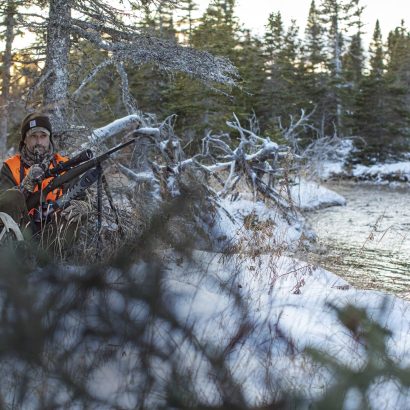
Your cache should blend in with its surroundings. Use only natural vegetation collected on site: cut cattails, reeds, willow branches. Avoid synthetic materials that create unnatural reflections. The height of your cache should not exceed that of the surrounding vegetation.
Create a clear shooting angle of 90-120 degrees facing the intended landing zone. Place your blind 15-25 meters from the center of your decoy formation for effective shots at 20-35 meters.
Common installation errors :
The layout of the decoys determines where the ducks will attempt to land. The “J” formation remains the most versatile: it creates a natural pocket of open water that invites ducks to land in your shooting zone.
Place the long end of the J perpendicular to the wind, with the hook pointing towards you. This configuration visually guides the ducks to the landing zone. Leave an open pocket of water 4 to 6 meters in diameter in front of your blind.
| Size of water body | Total number | Mallards | Sarcelles | Pilets | Spacing | Training |
|---|---|---|---|---|---|---|
| Small marsh (<1 ha) | 12-18 | 8-12 | 2-4 | 2 | 60-75 cm | J simple |
| Medium marsh (1-3 ha) | 18-30 | 12-18 | 4-8 | 2-4 | 70-85 cm | J or V |
| Large lake (>3 ha) | 30-48 | 20-30 | 6-12 | 4-6 | 80-100 cm | Double J |
Add 2 to 4 motion decoys: a jerk cord, spinning wings or a water agitator. Movement attracts attention from great distances and adds realism.
Mix the postures: 60% feeding (head down), 30% normal and 10% vigilant (head up). This diversity mimics a natural group where some feed while others watch out for predators.
Voice calling requires practice and restraint. A poorly executed or overly insistent call will drive ducks away more surely than silence. Invest in a quality maple or acrylic caller, and practice during the summer.
Typical call sequence :
1. Hailing call: 5-7 loud quacks at intervals to attract the attention of distant ducks. Use only if birds are more than 200 meters away.
2. Greeting call: Series of 3-5 medium-volume quacks as the ducks turn toward you. Rhythm: quack…quack-quack…quack.
3. Feeding call: Rapid guttural quacks in series: “ticka-ticka-ticka-ticka”. Imitate the sounds of feeding ducks. Low to medium volume.
4. Comeback call: If the ducks move away, an insistent series of 10-15 quick quacks can bring them back. Last resort only.
5. Silence: As soon as the ducks are within 50 metres and begin their descent, stop calling. Let the decoys do the work.
3-second rule: After each call sequence, wait 3 seconds to observe the reaction. If the ducks come, reduce the calls. If they move away, change technique or remain silent.
Ducks are more active and fly lower on overcast days with moderate winds. Calm, blue skies make them wary and keep them on large bodies of water.
Ideal conditions:
The best hunting periods are the first 2 hours after sunrise (morning feeding period) and the last 2 hours before bedtime (evening feeding period). Between these periods, activity decreases significantly.
| Weather conditions | Duck activity | Flight height | Recommended strategy |
|---|---|---|---|
| Cold front + NW wind | Very high | Low (10-30m) | Moderate calls, patience |
| Overcast + moderate wind | High | Medium (20-50m) | Regular calls |
| Sunny + light wind | Low | High (50-100m) | Aggressive calls if necessary |
| Light rain + wind | Medium | Low (15-40m) | Discreet calls |
| Calm weather + fog | Variable | Low (5-20m) | Silence, attentive listening |
Consult migration reports on the Canadian Wildlife Service website. A massive influx of migrants usually follows a cold front for 24 to 48 hours.
Rifle and ammunition :
Clothing and protection :
Essential accessories:
Duck hunting in Quebec generates significant economic benefits while contributing to wetland conservation.
National data :
Species most commonly harvested in Quebec (in descending order) :
The average success rate varies between 1.8 and 3.5 ducks per outing, depending on hunter experience and conditions. Experienced hunters with dogs achieve 4 to 6 ducks per outing during intensive migration periods.
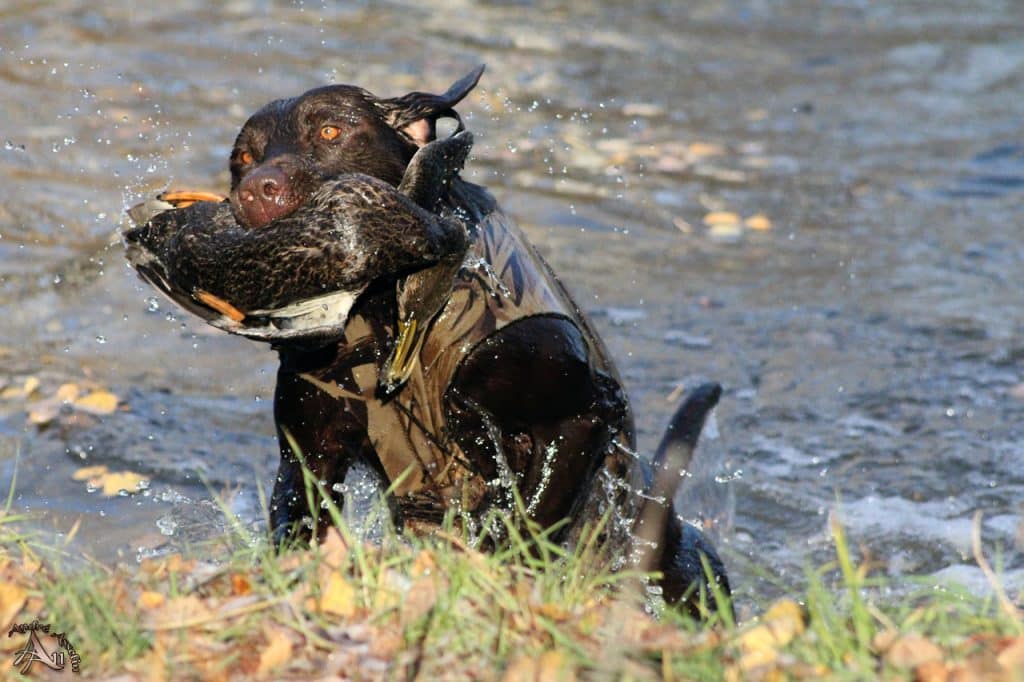
Scrupulously observe bag limits and legal hunting hours. Recover all shot birds – a well-trained dog reduces losses to less than 5%. Identify your target positively before shooting: confusing a protected species with a huntable one carries heavy fines.
Participate in Ducks Unlimited Canada’s banding programs and inventories. Your contribution will help ensure the sustainable management of populations and the protection of wetlands on which dozens of species depend.
The first 2 hours after sunrise offer the best success rate, followed by the late afternoon (2 hours before sunset).
12 to 18 for a small marsh, 18 to 30 for a medium marsh, 30 to 48 for a large body of water. Quality of placement takes precedence over quantity.
The 12-gauge remains the standard, with BB or #2 steel cartridges. The 20-gauge is acceptable for experienced short-range hunters.
Not compulsory, but strongly recommended. A dog reduces bird losses by 40-60% and facilitates recovery in dense vegetation.
Keep an eye on the weather: rapid drop in temperature, north-westerly winds, falling barometric pressure. Check migration reports.
In Quebec: 6 ducks maximum, including 2 black ducks maximum, 2 pintails maximum. Check the annual regulations, as limits vary by species and zone.
Thank you for taking the time to read us! Have a question? An idea? A hunting story to share? Write to us at: info@recalldesigns.com.
Follow us on Facebook or Instagram. You’ll find our latest news. And useful tips. Images from the field. Calls to action. Everything that fuels a real passion.
Looking for the right tool? Explore the Recall Designs online store. Our expertise is just a click away. Tested products. Designed for hunters. By hunters.




Comments are closed