The snow goose is a large aquatic palmiped belonging to the Anatidae family. It measures around 65 to 85 cm in length, with a wingspan that can exceed 1.5 m, and generally weighs around 3 kg.
There are two forms of coloration: the classic white form (white plumage, black primaries) and a “blue” form where the body is dark gray with a white head and neck. These two forms mostly interbreed.
Snow geese are highly social, living and migrating in large groups. They feed mainly on plant matter such as seeds, roots, leaves and stems in wetlands, fields or marshes.
Snow geese migrate great distances between their breeding grounds in the Canadian Arctic and their winter quarters further south in North America. Migratory stopovers are essential for replenishing energy reserves.
In Quebec, massive snow goose sightings at Baie-du-Febvre, Lac Saint-Pierre or Montmagny attract thousands of birds between late March and mid-April, offering spectacular shows and hunting opportunities.
Snow goose hunting is regulated in Canada and the United States under the Migratory Birds Convention, which governs the conservation and sustainable use of wild species.
In many Canadian provinces, including Quebec, snow geese are hunted in the fall (traditional) and spring during specific conservation seasons. In Quebec, the conservation hunting period can extend from early April to late May, and the daily harvest limit is often high.
It is imperative to have a federal migratory game license as well as the provincial hunting license required to comply with current legislation.
Certain regions of Quebec are particularly renowned for their snow goose hunting:
These areas offer both fall and spring hunting opportunities, depending on local migration dates and provincial regulations.
Snow goose hunting is unique because of the species’ large flocks and gregarious behavior. Unlike other game, success often depends on understanding migrations, habitat and responses to calls.
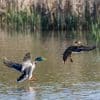
Snow geese often change direction and altitude, making approaches unpredictable.
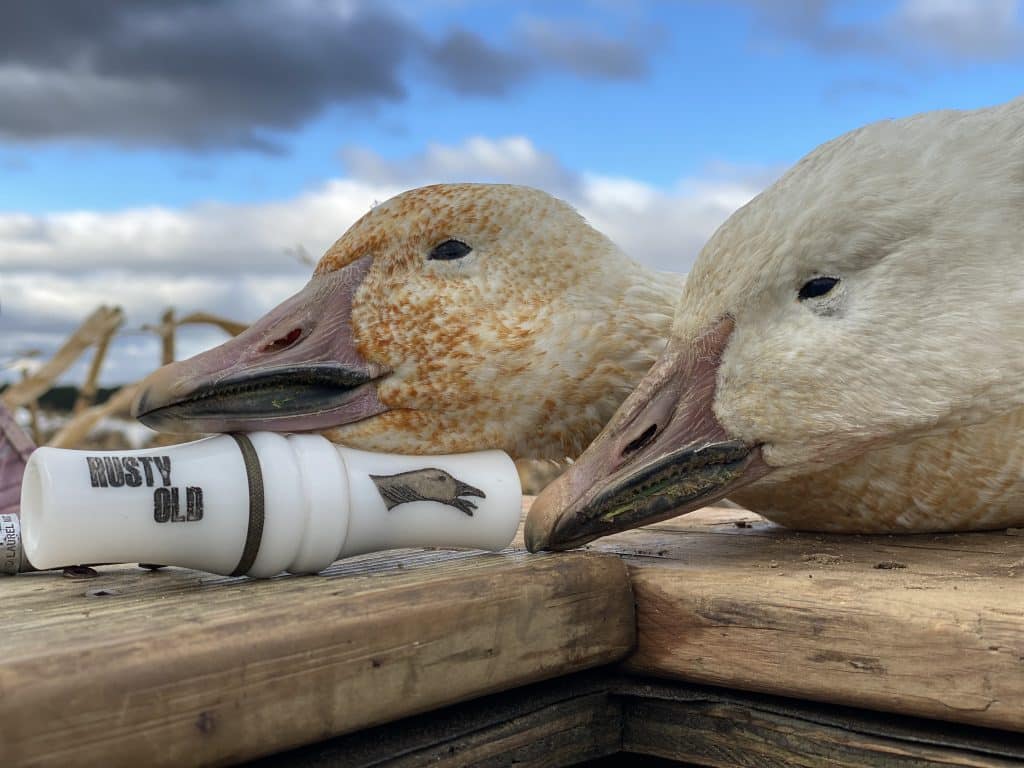
Snow geese are highly vocal, producing characteristic calls that can be imitated by specialized callers. To sound like a small feeding flock, alternate sounds by varying pitch and cadence.
The use of varied sequences increases effectiveness, as birds respond not only to a fixed sound, but also to combinations that suggest natural behavior.
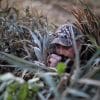
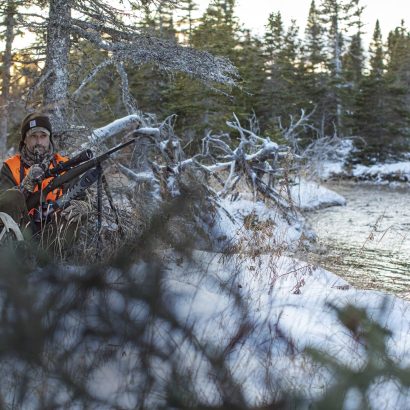
In addition to calls, large numbers of realistic decoys attract geese to the shooting zone. Camouflage is essential. Low caches concealed in fields or wetlands, with clothing adapted to variable conditions, enable you to remain invisible while taking advantage of passing areas.
Observing flights in the early morning or late afternoon, understanding wind direction and spotting areas where birds land to feed are all essential for positioning decoys and decoy calls.
A well-equipped white goose hunt greatly increases the probability of success:
| Type of material | Number of models | Market share (%) | Popularity |
|---|---|---|---|
| Exotic woods | 4 | 80% | ⭐⭐⭐⭐⭐ |
| Acrylic | 1 | 20% | ⭐⭐⭐⭐ |
| Model | Range (meters) | Sound Clarity | Durability | Overall rating |
|---|---|---|---|---|
| Acrylic | 150-200 | 9.5/10 | 10/10 | 9.7/10 |
| Blackwood African | 180-220 | 9.8/10 | 9.5/10 | 9.8/10 |
| Bocote | 170-210 | 9.6/10 | 9.3/10 | 9.5/10 |
| Bocote & Blackwood | 190-230 | 9.9/10 | 9.7/10 | 9.9/10 |
| Grenadillo | 200-250 | 10/10 | 9.8/10 | 10/10 |
| Condition | Recommended Model | Success Rate | Optimum Distance |
|---|---|---|---|
| Quiet time | Bocote | 92% | 150-180m |
| Light wind | African Blackwood | 89% | 160-200m |
| Moderate wind | Grenadillo | 94% | 180-220m |
| Open spaces | Bocote & Blackwood | 95% | 200-250m |
| All conditions | Acrylic | 88% | 140-190m |
| Features | Acrylic | Blackwood African | Bocote | Bocote & Blackwood | Grenadillo |
|---|---|---|---|---|---|
| Price | 125,00 $ | 125,00 $ | 125,00 $ | 125,00 $ | 125,00 $ |
| Weight | Light | Medium-heavy | Medium | Medium-heavy | Heavy |
| Maintenance | Minimal | Moderate | Moderate | Moderate | Moderate |
| Humidity resistance | Excellent | Good | Good | Very good | Very good |
| Aesthetics | Modern | Elegant | Distinctive | Unique | Refined |
| Hunter level | All levels | Intermediate+ | All levels | Advanced | Advanced |
| Model | Length (cm) | Diameter (cm) | Weight (g) | Sound volume (dB) |
|---|---|---|---|---|
| Rusty Old Acrylic | 12.5 | 3.2 | 85 | 95-105 |
| Blackwood African | 12.8 | 3.3 | 110 | 98-108 |
| Bocote | 12.6 | 3.2 | 95 | 96-106 |
| Bocote & Blackwood | 12.9 | 3.4 | 105 | 99-110 |
| Grenadillo | 13.0 | 3.3 | 120 | 100-112 |
| Wood type | Origin | Density (kg/m³) | Main characteristics |
|---|---|---|---|
| African Blackwood | East Africa | 1200-1300 | Very dense, fine grain, excellent for resonance |
| Bocote | Mexico, Central America | 900-1000 | Distinctive motifs, tonal/light balance |
| Grenadillo | Central America | 1250-1400 | Ultra-dense, maximum sound projection |
| Acrylic Premium | Canada | 1150-1200 | Resistant, uniform, easy care |
When should you go snow goose hunting?
Hunting generally takes place in autumn, and also in spring during specific conservation seasons. Specific dates vary by province.
Are special permits required?
Yes, you need a federal migratory game licence and a provincial small game hunting licence.
Is the white goose difficult to call?
This takes practice, as imitating credible and varied sounds significantly improves efficiency.
Thank you for taking the time to read us! Have a question? An idea? A hunting story to share? Write to us at: info@recalldesigns.com.
Follow us on Facebook or Instagram. You’ll find our latest news. And useful tips. Images from the field. Calls to action. Everything that fuels a real passion.
Looking for the right tool? Explore the Recall Designs online store. Our expertise is just a click away. Tested products. Designed for hunters. By hunters.




Comments are closed