

Complete guide to the installation of floating duck hunting blinds
The floating blind represents the ultimate evolution in water-based duck hunting. While land-based blinds confine you to the bank, the floating blind puts you right in the heart of the action – where ducks safely feed, rest and socialize.
Dabbling ducks instinctively avoid the banks, the predatory zones par excellence where foxes, coyotes and mink await them. By setting up 50-100 meters from the shore, in the center of the marsh, you exploit their comfort zone and drastically increase your chances of success.
Table of contents
- Why use a floating cache
- Types of floating caches and their applications
- Building a frame cache (DIY project)
- Stability, safety and regulations
- Tactical wind positioning
- Camouflage: the art of disappearing
- Installation on the day of the hunt
- Layout of decoys from a floating cache
- Practical considerations and maintenance
- Ethics and environmental impact
- FAQ – Frequently asked questions
1. Why use a floating cache | floating cache duck hunting
Major tactical advantages:
Minimal profile: Your silhouette blends into the water, virtually invisible from the air. Approaching ducks detect no anomalies in the landscape.
Optimum shooting angles: You’re on the same level as your decoys. No more problematic plunging shots from an elevated bank. All your shots are horizontal, safer and more effective.
Access to pristine areas: Deep marshes, isolated bays and areas inaccessible on foot become huntable. These areas see little pressure and are often home to the highest concentrations of ducks.
360° camouflage: Surrounded by water and aquatic vegetation, you blend perfectly into the biotope. Ducks can circle your position without detecting any threat.
Flexible positioning: You can move your blind according to wind, conditions and bird movements, impossible with a fixed ground blind.
2. Types of floating caches and their applications | duck hunting floating cache
Your choice of cover depends on the type of water, the depth, the wind and your budget.
Table 1: Types of floating caches
| Type | Description | Benefits | Disadvantages | Cost | Best use |
|---|---|---|---|---|---|
| Layout boat | Low-profile boat, lying position | Very stable, long range | Bulky, difficult to transport | 800-2 000$ | Large lakes, open bays |
| Frame cover | Float-mounted structure with rigid frame | Customizable, highly stable | Complex construction | 300-800$ (DIY) | Shallow marshes, fixed position |
| Coffin style | Folding frame on individual floats | Portable, lightweight, compact | Less stable in strong winds | 400-1 200$ | Variable marshes, mobility |
| Natural cover | Artificial island of vegetation | Ultimate invisible camouflage | Heavy, difficult to move | 500-1,000 (DIY) | High-pressure areas |
| Modified kayak | Camouflaged kayak with extensions | Total mobility, versatile | Limited stability, reduced capacity | 600-1 500$ | Exploration, small marshes |
Layout boat :
The layout boat is the Cadillac of floating caches. Built like a small boat with a fiberglass hull, it offers exceptional stability even on large, windy lakes. You lie completely inside, invisible to the ducks. Some top-of-the-range models include watertight gear compartments and wave guards.
The drawback: the weight (45-80 kg) and size require a suitable vehicle and often a trailer. Budget: $1,200 to $2,500 for a quality new model.
Frame cache (most popular in Quebec):
The framed blind is the preferred solution for most Quebec hunters. Custom-built, they consist of a rectangular frame (generally 1.2m x 2.4m) mounted on polystyrene floats or barrels. A wire mesh or net supports the camouflage vegetation.
This configuration allows complete customization, with the addition of storage compartments, cup holders, gun racks and even small seats for hunting while seated rather than lying down.
Coffin style:
The coffin cover is an ingenious compromise between portability and functionality. Its aluminum or PVC frame folds for transport and unfolds on site. Four individual floats (one at each corner) ensure buoyancy.
Ideal for the hunter who explores different marshes and doesn’t want to build a permanent cache. Weight: 15-30 kg depending on model.
Natural cache (artificial island):
The natural cache takes camouflage to the extreme. It’s a floating platform entirely covered with living vegetation – cattails planted in potting soil, marsh grasses, reeds. Seen from the air, it is indistinguishable from a natural islet.
This approach requires constant maintenance (watering, replacing dead plants) but offers absolute camouflage in areas of high hunting pressure.
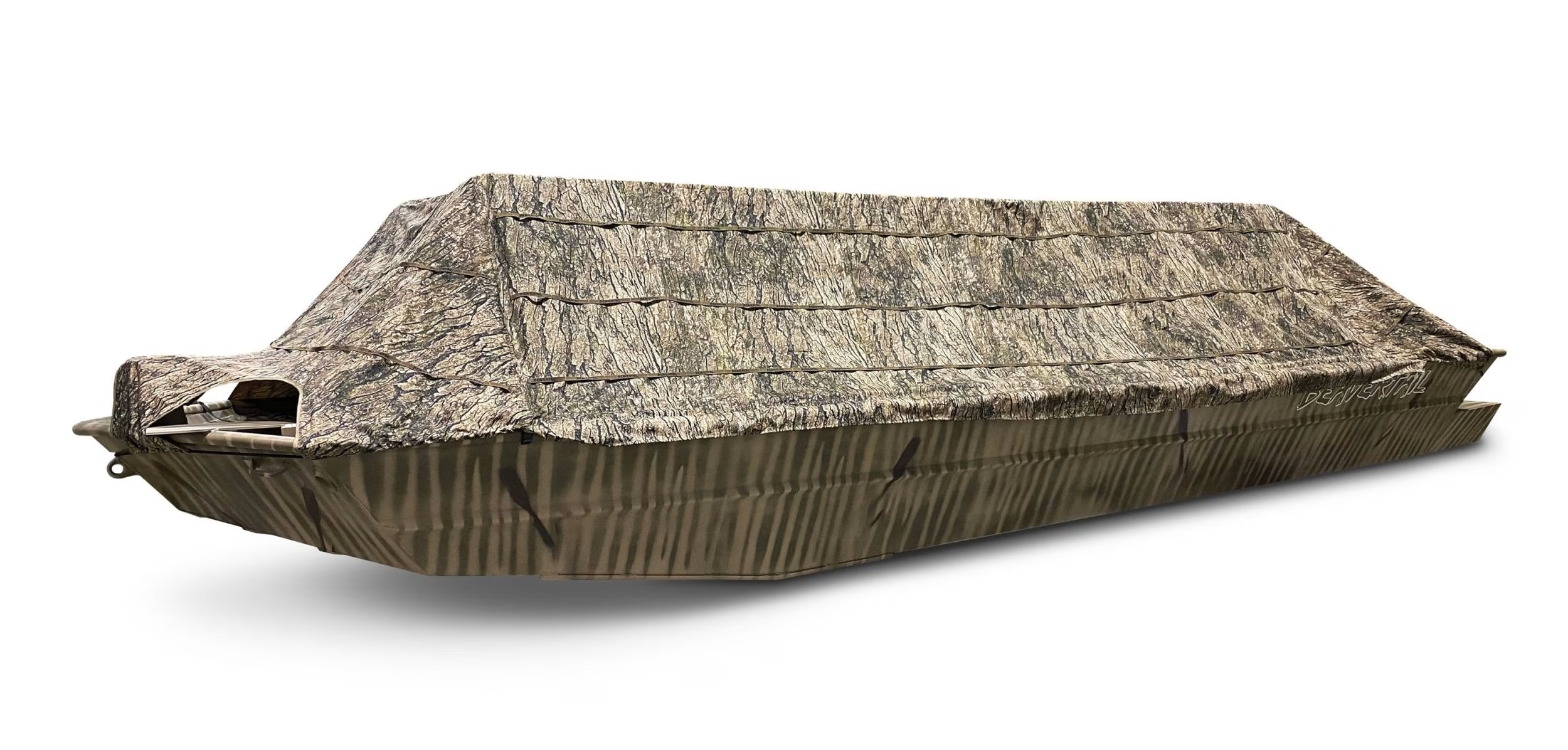
Example of a floating cache
3. Building a frame cache (DIY project) | duck hunting floating cache
Building your own floating cache is an affordable project that will save you 50-70% on the purchase of a commercial model.
Materials required:
Floating:
- 4 to 6 sheets of high-density extruded polystyrene (type Styrofoam blue R-20, 2 inches thick, 4′ x 8′)
- Alternative: 4 waterproof 205-litre (45-gallon) plastic drums
Structure:
- Schedule 40 PVC tubing, 1.5 inch diameter (8 linear meters)
- PVC elbows and fittings
- Alternative: 1″ x 1″ lightweight aluminum profile (more durable but 2x the price)
Mounting:
- Nylon ratchet straps (4 x 3 meters)
- 1/4″ stainless steel bolts with washers and nuts (24 pcs.)
- Stainless steel wood screws 2.5″ (50 units)
- Green zip ties (100 units)
Surface:
- Galvanized wire mesh, 2-inch mesh (2.5m x 1.5m)
- Wide-mesh camouflage net (optional)
Anchoring:
- 2 x 60 cm screw anchors (corkscrew)
- Braided nylon cord 1/4 inch (30 meters)
- 2 floating buoys to mark anchors
Buoyancy calculation :
The basic rule: 1 cubic foot (30cm x 30cm x 30cm) of extruded polystyrene can withstand 25 kg in fresh water.
Calculation for a 90 kg hunter:
- Hunter weight: 90 kg
- Equipment (rifle, ammunition, bag): 15 kg
- Structure (frame, truss): 10 kg
- Total: 115 kg
- Safety margin 30%: 115 x 1.3 = 150 kg required
- Buoyancy required: 150 kg ÷ 25 kg/ft³ = 6 cubic feet of polystyrene
A 4′ x 8′ x 2″ sheet = 5.3 cubic feet. You’ll need at least 2 full sheets to guarantee safety and stability.
Construction stages:
1. Frame assembly (2 hours):
Create a 1.2m x 2.4m rectangle with the PVC pipes. Use 90° elbows at the corners and a T-connector in the center of each long side to add reinforcing ties. Glue the joints with PVC cement and leave to dry for 24 hours.
2. Float installation (1 hour):
Cut the polystyrene into blocks measuring 60cm x 60cm x 10cm. Attach 6 blocks to the underside of the frame: 2 front, 2 center, 2 back. Use the ratchet straps to hold everything firmly in place. The straps should go all the way around the frame, clamping the floats to the structure.
3. Fixing the lattice (30 minutes):
Unroll the wire mesh on the frame. Secure with quick-release fasteners every 15 cm. The mesh should be taut but not distorted. Fold sharp edges down to avoid injury.
4. Anchor points (15 minutes):
Install 2 stainless steel rings (tow ring type) at the front and rear of the frame to attach the anchor ropes.
Total project cost: $250-$400, depending on materials chosen and tools already owned.
4. Stability, safety and regulations | floating duck hunting cover
The stability of a floating cache is a matter of life and death. Tipping over in 8°C water in November can cause fatal hypothermia in less than 20 minutes.
Stability principles:
Minimum width: Never less than 1.2 m wide for a single hunter. Prefer 1.4-1.5m if possible. Width is your best insurance against tipping.
Weight distribution: Keep your center of gravity as low as possible. Avoid sitting – stay lying down or crouching. Any sudden movement will unbalance the cache.
Stability test: Before your first outing, test your cache in a shallow area near the shore. Climb, move, simulate a shot. If it leans dangerously, add floats or widen the base.
Table 2: Safety and mandatory equipment
| Equipment | Why | Quebec regulations |
|---|---|---|
| PFD (flotation device) | Mandatory, rapid hypothermia | Mandatory on all boats |
| Emergency whistle | Signal emergency | Required on all boats |
| Waterproof lamp | Visibility, emergency | Highly recommended |
| Safety rope | Tipping recovery | Recommended |
| Waterproof phone | Emergency call | Essential |
| Safety knife | Emergency rope cutting | Recommended |
Canadian watercraft regulations:
A floating cache is considered a watercraft in the eyes of Transport Canada. You must therefore carry :
- PFDs of appropriate size and in good condition
- Audible signalling device (whistle)
- Waterproof lamp for night navigation
Failure to comply can result in fines ranging from $200 to $500.
Toggle protocol:
- Wear your PFD (which must be worn at all times)
- Hang on to the cache (it floats)
- Do not attempt to climb back on (risk of second tipping).
- Swim to shore by pushing the cover in front of you
- In deep water, stay with the cache and signal your presence
Conditions to be avoided:
- Waves over 30 cm (sustained wind >25 km/h)
- Forming ice or floating ice patches
- Water temperatures below 4°C
- Thunderstorms or forecast high winds
5. Tactical positioning according to wind conditions | floating duck-hunting blinds
The wind dictates everything in duck hunting. Mastering the positioning of your cache in relation to the wind turns a mediocre outing into a memorable success.
Cardinal rule: ducks ALWAYS land and take off into the wind. This law of nature is absolute and non-negotiable.
Optimum configuration:
Position your blind so that the wind blows at your back or slightly sideways (30-45° angle). This way, ducks approaching your decoys will pass in front of you within shooting range before landing.
Ideal scenario (wind at your back):
- Cache at point A
- Decoys 15-25 metres ahead (point B)
- Wind pushes from A to B
- Ducks approach B, pass over your blind, turn into the wind and land.
- Shooting at 20-30 meters, ducks on final approach
Configuration to be avoided (headwind):
If the wind blows directly towards you, the ducks will land behind your blind, 40-60 metres away, out of effective range. You’ll watch them land without being able to shoot.
Rotating wind adaptation:
The wind often changes during the day, especially in autumn. Two solutions:
- Repositioning the cover: time-consuming and risky (you’ll scare the ducks away).
- Readjusting decoys: A quick and efficient solution. Move your decoys to maintain the wind-in-the-back configuration without moving the cache.
Always keep a spare anchor and 10 metres of extra rope for these adjustments.
Table 3: Positioning according to wind direction
| Wind direction | Cache position | Decoy position | Landing zone | Success rate |
|---|---|---|---|---|
| Behind your back | Optimal | 15-25m in front | In front of you | 80-90% |
| 45° left/right | Very good | 15-25m front side | Front-side | 70-80% |
| Lateral (90°) | Acceptable | Left or right | Sideways | 50-60% |
| From the front | Wrong | Behind you | Behind you | 20-30% |
6. Camouflage: the art of disappearing | floating duck hunting cache
Camouflaging a floating cache requires absolute rigor. Ducks in flight have panoramic and plunging vision – any visual anomaly will alert them at 200 meters.
Natural vegetation mandatory:
NEVER use visible synthetic materials. Vegetation must be harvested on site on the same day or 2 days before. Give preference to :
Cattails (Typha): The star plant of aquatic camouflage. Cut stems 1.5-2 meters long with their spikes. Plant them tightly around the frame, angled outwards to create a dome.
Reed (Phragmites): Excellent for open areas. Finer than cattails, they create a dense screen without being too massive.
Sedges and marsh grasses: Perfect for filling gaps and adding texture. Harvest with roots if possible to maintain freshness.
Bulrushes and bulrushes: Useful for finishes and details.
Fastening technique:
- Start with the perimeter: create a “fence” of cattails around the perimeter.
- Fill holes with grasses and sedges
- Add an airy top layer (not too dense, otherwise it will look artificial)
- Fasten with green quick-release fasteners, invisible in vegetation
- Check appearance from the water at 50m, 100m and 200m
Renewal:
Cut vegetation dries, yellows and dies. Your perfect camouflage on Monday will be suspect on Thursday. Renew at least :
- Every 3-4 days in early season (September-October)
- Every end-of-season outing (November-December)
Hunter camouflage:
You’re part of the cache. Wear:
- Camo marsh jacket and pants (aquatic vegetation motif)
- Camo cap or tuque
- Camo gloves (your hands move, so they must be invisible)
- Face net or camo paint (face is the most visible point)
Avoid sudden movements. Ducks detect movement before shape.
7. Installation on hunting day | duck hunting floating blind
Installing a floating blind requires method and forethought. A botched installation ruins a day’s hunting.
Recommended timeline:
D-1 (the day before):
- Check the weather and wind forecasts
- Prepare all equipment: cover, decoys, anchors, spare vegetation
- Load the vehicle in the evening (early departure the next day)
H-120 minutes (2h before sunrise):
- Arrival on site
- Transporting the cache to the water (canoe, kayak or drag)
H-90 minutes:
- Launching the cache
- Navigation to chosen spot
- Front and rear anchoring (well tensioned)
H-60 minutes:
- Layout of decoys according to wind direction
- Test configuration (distances, angles)
H-45 minutes:
- Add fresh plant camouflage
- Checking camouflage from different angles
H-30 minutes:
- Final installation in the cache
- Equipment storage (rifle, cartridges, thermos)
- Stability test and firing simulation
H-20 minutes:
- Complete immobility
- Listening and observing
- Mental preparation
H-0 (sunrise):
- First legal hunting light
- The ducks are starting to move
Transporting the cache :
For heavy caches, a 4-meter canoe is ideal. Tow the cache behind the canoe or carry it disassembled inside. For shallow marshes (less than 60 cm), simply drag the cache through the water to the spot.
Professional anchorage :
Anchors should be set at 45° to the bottom. Tighten ropes moderately – neither too loose (to prevent drifting) nor too tight (to pull out in waves). Use floating buoys to mark your anchors and facilitate retrieval.
8. Layout of decoys from a floating cache
The layout of the decoys differs slightly when hunting from a floating cache rather than from the shore.
Optimum distance :
Place your decoys in a semi-circle or “J” pattern 12-20 metres from your blind. Closer than from the bank, because you’re already at water level and your shooting range is reduced when lying down.
Recommended quantity :
- Small marsh: 12-18 decoys
- Medium marsh: 18-30 decoys
- Large bay: 30-48 decoys
Landing pocket :
Create an area of open water 4-6 meters in diameter just in front of your blind (at 10-15m). This is where the ducks will want to land. Surround this pocket with your decoys to make it attractive.
Movement:
From a floating cache, motion decoys are essential. The jerk cord (a rope attached to 2-3 decoys that you pull to create ripples) is particularly effective. You can manipulate it discreetly from your position.
9. Practical considerations and maintenance
Off-season storage :
- Completely clean the cover (mud, algae)
- Dry all equipment (to prevent mould)
- Store away from UV light (polystyrene degrades in sunlight)
- Check the condition of straps and bindings
Routine repairs :
- Cracked polystyrene: Expanding foam + waterproof adhesive tape
- Broken PVC frame: Repair sleeve + PVC cement
- Torn mesh: Galvanized wire or quick-release fasteners
Service life :
A well-built and maintained cache lasts 8-12 seasons. Polystyrene is the limiting element (UV degradation and impacts).
10. Ethics and environmental impact
Respecting habitats :
- Limit vegetation harvesting (don’t strip an area)
- Do not destroy aquatic grass beds by anchoring
- Remove all waste (quick-releases, broken ropes)
Safety for others :
- Mark your cache with an orange flag when you travel
- Remove the cover after the hunt (do not leave any permanent fixtures)
- Respect distances from other hunters (minimum 100m)
11. FAQ – Frequently asked questions
Is a floating cache legal in Quebec?
Yes, perfectly legal for duck hunting. It is considered a boat and must comply with Transport Canada regulations (PFD mandatory).
What is the ideal water depth?
Between 60 cm and 2 metres. Less than 60 cm and you risk hitting the bottom as you move. More than 2m and anchoring becomes difficult.
How much does a floating cache cost?
DIY: $250-500. Commercial model: $800-$2,500. Top-of-the-range layout boats can exceed $3,000.
Can two people hunt in a cache?
Possible with a wide (1.8-2m) and long (3m+) cache, but stability and camouflage become very difficult. Better to have two separate blinds.
How do I transport a floating cache?
Canoe or kayak for longer distances. Drag in shallow water. Some caches can be dismantled for transport by vehicle.
Do I need a special permit?
No, just your small game hunting license and hunter’s certificate. But be sure to obey all boating regulations.
Thank you for taking the time to read us! Have a question? An idea? A hunting story to share? Write to us at: info@recalldesigns.com.
Follow us on Facebook or Instagram. You’ll find our latest news. And useful tips. Images from the field. Calls to action. Everything that fuels a real passion.
Looking for the right tool? Explore the Recall Designs online store. Our expertise is just a click away. Tested products. Designed for hunters. By hunters.


Comments are closed